Air-driven turbine powerheads, in production since 1980

TurboCat Central Vacuum Powerhead

Twelve to twenty-five years of service, then the brush roll stops turning: that is when most buyers come looking for a TurboCat. The air-driven turbine runs on your central vacuum's own suction, and 1,803 verified buyers rate the line 4.4 stars. The tradeoff sits further down this page, because on plush high-pile carpet an electric head still spins faster.

What fits it, what runs it, what covers it

Drop the wand into your wall inlet and this air-driven turbine powerhead spins up on central vacuum suction alone. Nothing gets wired and nothing gets adapted, which is the whole difference from a corded electric power nozzle. The same standard flange that held your old head locks this one onto Beam, Nutone, Electrolux, Vacuflo, Canavac, and Cyclovac systems.

  • Twist the dead head off a Beam or Nutone flange and this one clicks onto the exact same mount; Electrolux, Hayden, VacuMaid, Aggressor, Vacuflo, MD, Canavac, Cyclovac, and Air Vac take it too
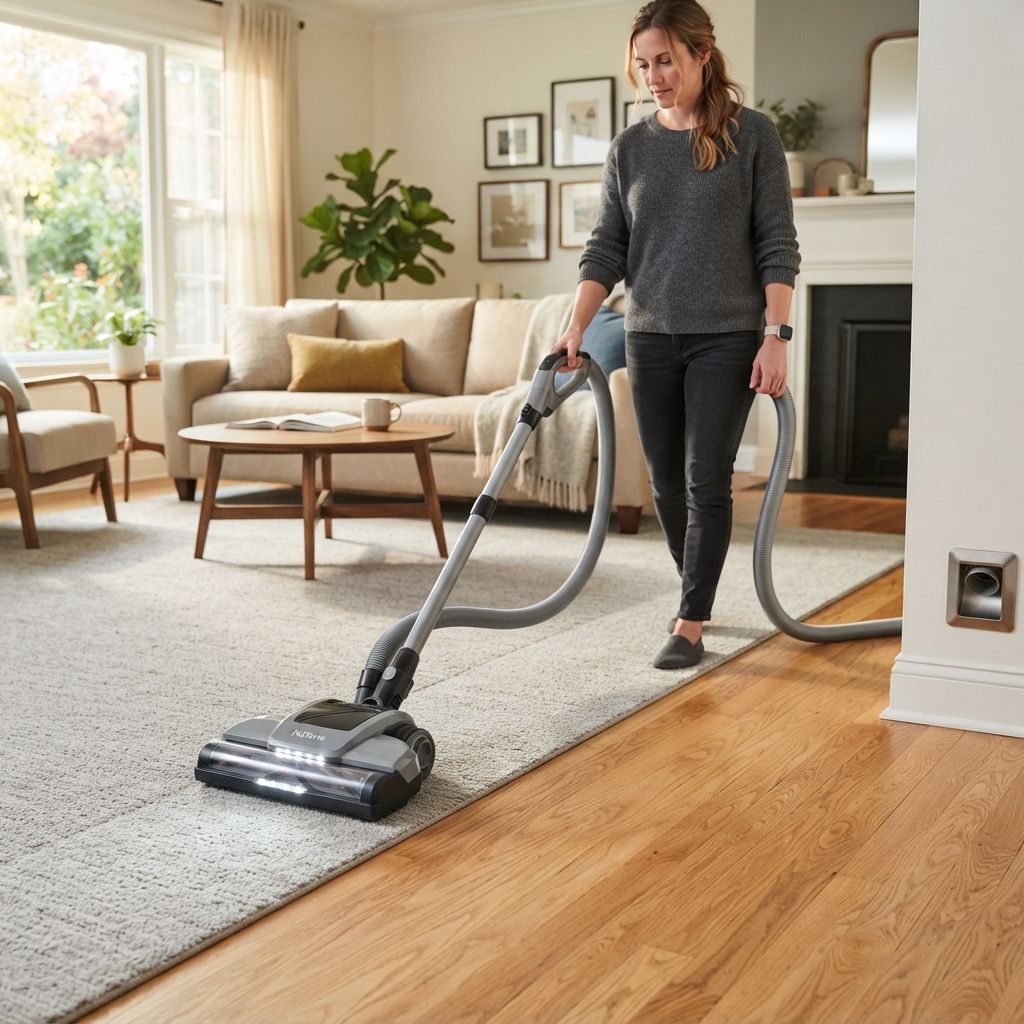
  • Runs on the suction already in the pipe, so no cord trails behind you across the hallway and no outlet has to be free
  • Keep the receipt in the drawer: coverage runs three years on the standard air-powered head and two on the white H-P brush
3 yrWarranty term on the standard air-powered head
No cordRuns on the suction already moving in the pipe
11Central vac brands take the same 1.5-inch flange
4.4★Weighted across 1,803 verified buyer reviews

Four Pounds, No Cord, and Parts You Can Still Buy

Owners replacing a head that ran 17 or 25 years want the same machine back, not a lighter imitation of it.

  1. Confirmed in Owner Reports at 17 and 25 Years

    One owner ran the same turbine on a Vacu-Maid system for 25 years before the brush roll finally gave out.

  2. Vacuum Three Floors Without Plugging Anything In

    Carry the head upstairs, drop the wand into the bedroom inlet, and the brush spins the moment the pipe pulls air.

  3. One Less Motor to Burn Out

    Airflow drives the brush, so nothing in the head shorts out at the hose cuff after a decade in a damp basement.

  4. Belts and Brush Strips Outlive the Housing

    Owners report swapping the belt twice across twelve years and running the same housing straight through both changes.

  5. The Brush Slows on Plush Pile, and We Say So

    Push it into deep frieze and the roller drags. Low-pile carpet, area rugs, and hard floors are where this head holds speed.

  6. Both Edges Clear the Baseboard on One Pass

    Run the 13-inch path along a wall and the second edge lifts grit that a single-edge nozzle walks straight past.

TurboCat Powerheads and Attachment Sets

Every head on this page runs on suction alone, from the black flanged nozzle through the flagship 30-ft attachment bundle.

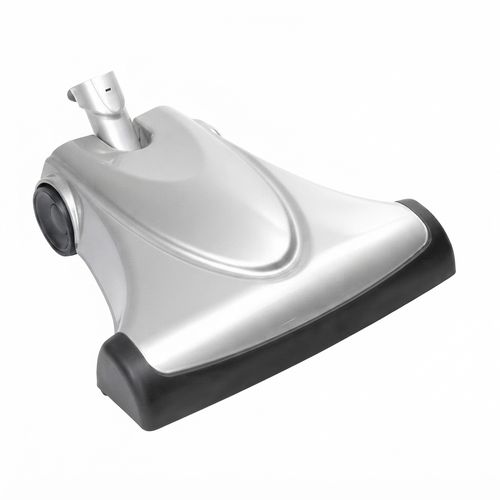
Vacuflo Turbocat Air Turbine Nozzle, Black

Vacuflo Turbocat Air Turbine Nozzle, Black

NJ 4.3 (458)

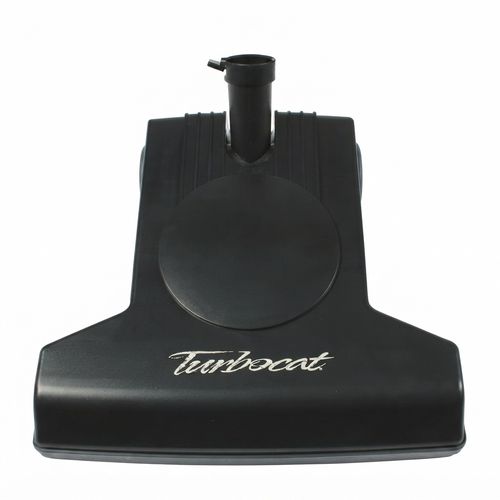
Push the black TP-210 onto the wand already hanging in your closet and the turbine spins the moment the wall valve opens, with no cord to find and no inlet to rewire. The horizontal turbine body sits low and T-shaped, which is what lets it reach under a bed frame and work in tight against chair legs. Unscrew the dead head off a Beam or Nutone wand, seat this one on the same 1.5-inch flange, and finish the room you walked in to clean. Entry tier of the line, five pounds in hand, and owners report 15 and 25 years on one nozzle. Check today's price.

  • Slides under a bed frame at three and a half inches tall, then works in tight against chair legs
  • Chevron dual-height bristles hold the nap through a full hallway pass, because the roller never lifts off the wool
  • 4.3 stars across 458 buyer reviews, with owners reporting 15 and 25 years of service
Check price
TurboCat Zoom Air Driven Central Vacuum Power Brush in Platinum Silver-Gray

TurboCat Zoom Air Driven Central Vacuum Power Brush in Platinum Silver-Gray

. 4.5 (458)

Pull off a head that spent its last two winters whining and the Platinum Silver-Gray Zoom answers at a lower pitch. One owner who swapped out a twenty-year-old unit reported the same clean, quieter. Run-silent bearings hold the housing steady, so the turbine note stays flat through a full living-room pass instead of climbing under the couch. Where a bare-shell nozzle chips a painted baseboard inside a season, the soft Pro-Tech collar wraps the front and both corners and absorbs that contact. Mid-tier shell, 4.5 stars across 46 buyer reviews. Check today's price.

  • Bump a stained oak table leg at speed and the wrap-around collar takes the hit, not the shell
  • The silent-drive belt and bearing insulators damp vibration before it reaches the wand, so a 9 p.m. pass does not carry up the stairwell
  • Multi-port base plate keeps airflow moving where a single-port plate loads up and stalls
Check price
Turbocat Air Powered Central Vacuum Powerhead/Brush

Turbocat Air Powered Central Vacuum Powerhead/Brush

Ó 4.4 (458)

Model 8695 replaces every earlier TurboCat and the TP-210, which makes it the default answer when the head you pulled off is too worn to identify. Owners with long-coat dogs report shorter cleanouts than the old continuous brush allowed, with far less hair left wound around the roller after a week of shedding season. Where an electric nozzle carries a motor that eventually burns out, this one leaves the driving to airflow. Three-year manufacturer warranty, the longest published term on any model here, and 4.4 stars across 211 buyer reviews. Check today's price.

  • Drops onto the same wand as any earlier standard head or TP-210, so no model hunt before ordering
  • DeepSweep staged bristles steer coat toward the intake port rather than spooling it on the shaft
  • Coverage runs into the third winter: a roller that seizes at month 26 is a claim, not a fresh purchase
Check price
HP Products Turbocat Central Vacuum Air Turbine Brush, Gray

HP Products Turbocat Central Vacuum Air Turbine Brush, Gray

Ȧ 4.4 (458)

Drag the gray TP-210 off a hallway runner onto bare oak and the dual-height bristles hold contact straight through the transition. The 13-inch dual-edge path clears both sides of a baseboard run in one pass, and at four and a half pounds you carry it up a stair flight one-handed. Where the older continuous-brush design packed solid with dog hair after every use, this stepped bristle pattern sends most of the coat into the canister instead. Loudest published figure on the line at 69 dB, which owners of 1990s heads do notice. 4.4 stars across 550 buyer reviews. Check today's price.

  • Clears both edges of a baseboard run in a single pass across the full path width
  • Stepped bristle rows shed long coat into the canister instead of binding it at the shaft caps
  • 550 buyer reviews at 4.4 stars, the deepest record on this line
Check price
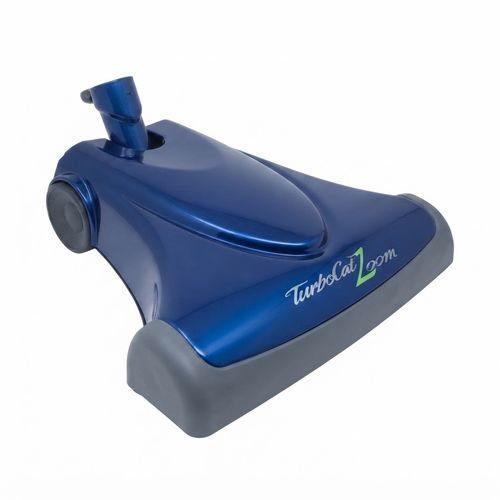
TurboCat Zoom Air-Driven Central Vacuum Power Brush in Sapphire Blue

TurboCat Zoom Air-Driven Central Vacuum Power Brush in Sapphire Blue

J 4.1 (458)

Where the Platinum shell reads as the upgrade, the Sapphire Blue Zoom runs the same drive system in a different colorway, built under the CVC Inc. label rather than Vacuflo. The multi-port base plate runs recessed channels around the intake, so airflow still reaches the turbine when one port loads up mid-room. Where a taller shell stops at an end-table rail, this body still goes low, though one owner who ran an original for twelve years reports the shell change as the visible difference. 4.1 stars across 74 buyer reviews, the most mixed record here. Check today's price.

  • Owners running two heads park this one on the upstairs wand, so the landing gets vacuumed without a trip down the flight
  • Same air-driven drive as the Platinum shell; the colorway and badge change, the mechanism does not
  • The 4.1-star record splits by floor: hardwood owners report quiet seasons, a few on deep carpet report a belt change by year two
Check price
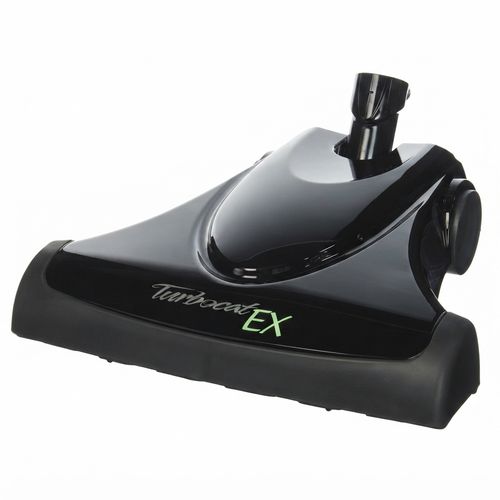
HP8705 Turbocat Zoom Turbine Nozzle - Onyx

HP8705 Turbocat Zoom Turbine Nozzle - Onyx

f 4.2 (458)

Check the thread on your wand before this one goes in the cart: the Onyx HP 8705 takes a 1.25-inch NPT connection rather than the standard flange the rest of the line uses. The DeepSweep II roller runs tufted bristles for carpet contact, and at three inches tall the body clears under beds where an upright nozzle stops at the rail. Where an electric head needs a powered inlet, this nozzle threads onto a Vacuflo NPT wand and runs on suction alone. One owner notes the head does not swivel, so you aim it straight on. 4.2 stars across 102 buyer reviews. Check today's price.

  • Threads onto an NPT wand, so measure your connection before ordering this variant
  • DeepSweep II tufted bristles hold contact through a low-pile wool runner while recessed channels keep feeding the turbine
  • Owners on low-pile carpet report seasons of service, while a deep area rug bogs the roller down: match it to the floor you own
Check price
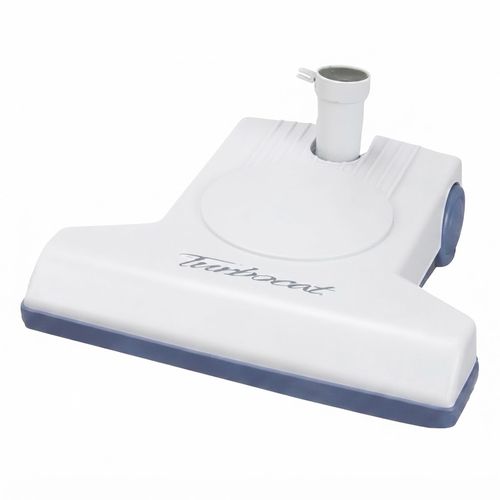
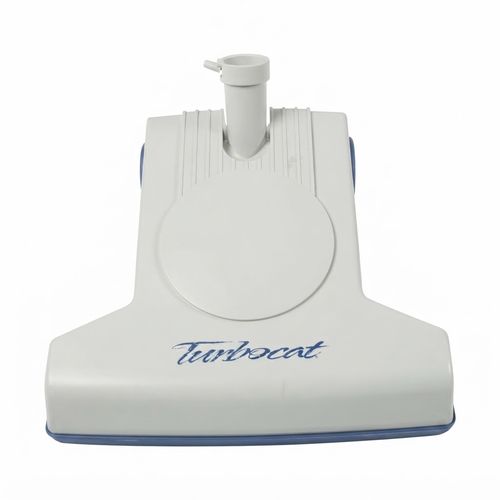
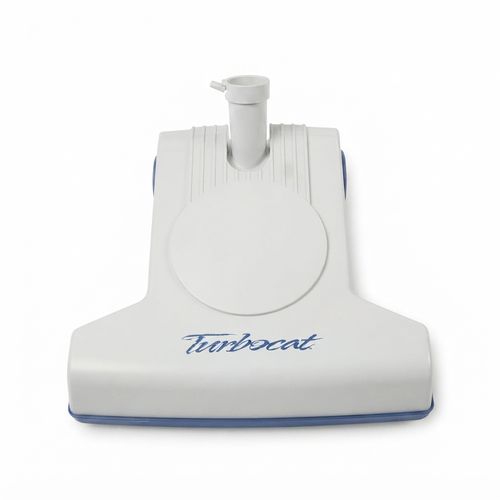
H-P TurboCat Air Driven Brush for All Central Vacuums (White)

H-P TurboCat Air Driven Brush for All Central Vacuums (White)

Ũ 4.4 (458)

Owners who home-tested the Zoom against this white original kept the original, because the newer shell sat higher and stopped short of the end tables. Four pounds and a flat body is the whole argument: one hand carries it up a stair flight, and the head still gets under a couch skirt without a fight. Where a redesign adds height for the sake of styling, this shape has not changed since it replaced the head that ran seventeen years. Two-year manufacturer warranty, 4.4 stars across 360 buyer reviews. Check today's price.

  • The short white head clears an RV aisle and a low bed frame where a taller shell loses two inches of headroom
  • No motor rides on top of the housing, so the shell stayed flat and slides under a daybed frame that a taller redesign only bumps
  • Two-year manufacturer warranty published on this model
Check price
Central Vacuum TurboCat Sapphire Blue Powerhead 30 ft Attachment Set

Central Vacuum TurboCat Sapphire Blue Powerhead 30 ft Attachment Set

 5.0 (458)

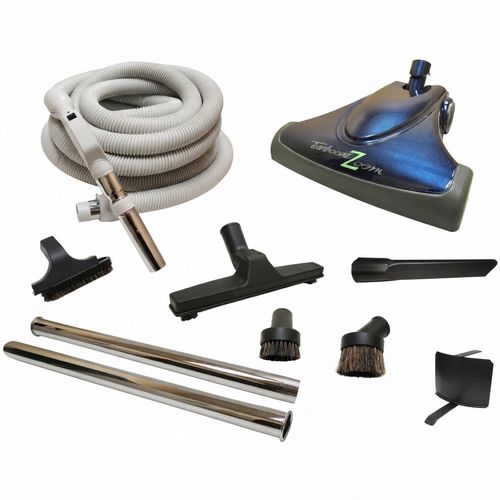
Open the box to a 30-ft hose with a gas-pump handle, a set of chromed wands, the Sapphire Blue powerhead, and four tools hanging on a metal hanger. The two-position switch sits on the hose handle, so you change modes at the wand instead of walking back to the wall valve. Where buying the nozzle alone leaves you matching wands and cuffs afterwards, this bundle arrives already matched, with one line worth reading twice: the hose does not work with a Vacuflo two-pin wall valve. Flagship tier, and the thinnest review record here at two ratings. Check today's price.

  • Seat a chrome wand, clip on the floor tool, and 30 feet of hose covers the far bedroom from one hallway inlet
  • The gas-pump grip carries hose weight through your palm, where a straight wand handle hangs it off your fingertips for a whole floor
  • An epoxy-coated metal hanger holds all four tools where a moulded plastic rack splits at the hook after a cold garage winter
Check price

Under the Bed, Along the Baseboard, Around the Table Leg

Buyers ask where a powerhead fits before they ask how it cleans, and the TurboCat body answers that at the bed frame.

Turbocat Air Powered Central Vacuum Powerhead/Brush

Cross a Hallway Runner Onto Bare Oak Without Stopping

The stepped bristle pattern is the change owners noticed first when they retired a 15-year-old continuous-brush head. One long-coat dog used to pack that old roller solid after every single pass. On the chevron roller the same coat rides into the canister instead of winding around the shaft, and the bristles stay down on wool and bare oak alike.

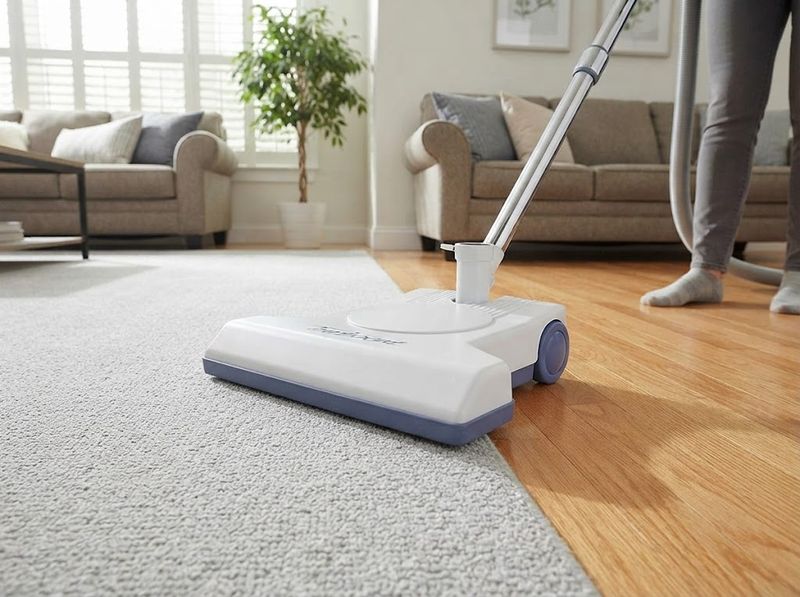
  • Drag the head off a wool runner onto bare oak and the dual-height bristles hold contact through the transition, with no height dial to touch.
  • The chevron pattern steers hair toward the intake port rather than spooling it on the shaft, which is why long-coat owners report shorter cleanouts.
  • Where an older continuous-brush roller packed solid after a single room, the stepped design sheds most of the coat into the canister.
See the chevron roller detail
Vacuflo Turbocat Air Turbine Nozzle, Black

Pull the Dead Head Off and Push This One On

Pull the old nozzle off the wand and hold it next to the wall flange: Beam, Nutone, Electrolux, Hayden, VacuMaid, Aggressor, Vacuflo, MD, Canavac, Cyclovac, and Air Vac systems all take the same 1.5-inch mount. Buyers who moved into a house with a Filtex system already in the wall describe the same swap. Old head off the wand, new head on, vacuuming the next room inside a minute.

  • Twist the worn nozzle off the wand, seat this one on the same flange, and start on the living room rug before your coffee cools.
  • Check the wand thread first on the single exception: the Onyx nozzle screws onto a 1.25-inch NPT Vacuflo wand instead of seating on the standard flange.
  • Where an electric nozzle sends you hunting for a matching electrified hose and a powered inlet, this one starts working the second the valve opens.
See the black flanged nozzle
TurboCat Zoom Air Driven Central Vacuum Power Brush in Platinum Silver-Gray

Ride the Head Into a Chair Leg and Check the Finish

The soft Pro-Tech collar wraps the full front and both corners of the Platinum Silver-Gray Zoom, and that collar is the part that meets your furniture. Owners cleaning around painted baseboards and stained oak legs come back to this in reviews. The head bumps, the rubber takes it, the finish stays intact.

  • Push it under a dining table at speed and the wrap-around collar meets the leg first, well before the plastic shell does.
  • Easy-glide front rollers carry the weight over a threshold strip so the base plate never scrapes the wood on the way through.
  • Where a bare-shell nozzle chips baseboard paint inside a season, the rubber collar absorbs that same daily contact.
See the Platinum Silver-Gray Zoom shell
HP8705 Turbocat Zoom Turbine Nozzle - Onyx

Slide It Flat Under a Bed Frame Without Kneeling

The turbine lies horizontal instead of upright, which holds the body at 3.5 inches tall and takes the head where an upright nozzle stops. One owner compared the standard head against the taller Zoom shell at a local store and kept the original, because it still cleared the end tables in the living room.

  • Push the head flat under a bed frame from the doorway and reach the far corner without dragging the mattress off.
  • The T-shaped body works right in against table and chair legs because the intake sits ahead of the turbine housing rather than above it.
  • Where a taller shell stops dead at an end-table rail, this body carries on to the wall.
See the low-profile Onyx nozzle

What Owners Say After the Swap

Buyers who pulled a head that had run a decade or longer, in their own words.

Our Beam head finally quit after seventeen winters, and the brush had been dragging on the den carpet since Christmas. I could not read a model number off the old shell, so I ordered the 8695 on the strength of the note saying it replaces the earlier heads. It seated on the same wand in about ten seconds. I vacuumed the whole upstairs that evening without hunting for an outlet, which is the part I had forgotten I liked.

★★★★★ Marilyn K. Verified Purchase TurboCat air-powered powerhead

The low body is why I picked this one. It slides flat under our bed frame from the doorway, so I stopped dragging the mattress off every spring. On the wool runner in the hall it lifts grit the old nozzle walked past. The roller does slow down in the deep pile in the guest room, and I knew that going in from the description here. Four stars because it is honest about where it works.

★★★★☆ Dennis R. Verified Purchase Vacuflo air turbine nozzle, black

Two shepherds and a long-haired cat. The old continuous brush packed solid after one room and I was cutting hair off the shaft with a seam ripper every Sunday. The chevron roller sends most of the coat straight into the canister instead. I still pull the base plate once a month and clear both shaft caps, but that is five minutes now instead of half an hour. Gray head, plain flange, nothing to plug in.

★★★★★ Paula S. Verified Purchase H-P TurboCat air turbine brush, gray

We have painted baseboards in every room downstairs and the last nozzle chipped them inside a season. The rubber collar on this one wraps the whole front, so when I run it into a dining chair leg the rubber takes the hit and the finish stays clean. It does sit taller than the head it replaced, which I noticed at the end tables in the living room. Worth checking your clearance first if you have low furniture.

★★★★☆ Greg T. Verified Purchase TurboCat Zoom, Platinum Silver-Gray

The belt stretched in month nine and the roller started slipping on carpet. The two-year coverage on this one made that a phone call instead of a new head, and the replacement belt went on at the kitchen counter in one sitting with the base plate off. Same housing, back on the wand that night. I keep a spare belt in the drawer now, which is the advice I wish I had read before the first one went.

★★★★★ Anne-Marie L. Verified Purchase H-P TurboCat air-driven brush, white

Fit is fine and cleaning is fine. The pitch is what caught me off guard. Coming off a nineties head that had gone quiet with age, this turbine sounds noticeably brighter, and my wife asked what was wrong with it the first evening. It settled into a steadier note after the first week once the belt bedded in. Three stars for the noise, not the cleaning, because it does pull the stair landing clean in one pass.

★★★☆☆ Ray D. Verified Purchase TurboCat Zoom, Sapphire Blue

I inherited a system with no tools at all, just the inlets in the walls. This set arrived with the powerhead, the chromed wands, the crevice and upholstery tools, and a hose hanger I mounted in the basement the same afternoon. Read the note about the two-pin wall valve before you order, because that caught a neighbour of mine out. Ours is a plain valve and it seated on the first try.

★★★★★ Frank O. Verified Purchase Sapphire Blue powerhead attachment set

Check your wand thread before you order this one. The Onyx screws onto a 1.25-inch NPT connection rather than seating on the standard flange, which is exactly what our old Vacuflo wand takes, so it went straight on. A neighbour with a flange wand had to send hers back inside the return window. The nozzle itself is solid, the bumper is thick, and the bristles hold contact on the low-pile runner in our entry.

★★★★☆ Judy W. Verified Purchase TurboCat Zoom turbine nozzle, Onyx

The Figures Behind the Turbine, and Where Each One Comes From

Warranty terms, spec sheets, and 1,803 owner reviews carry a number where most powerhead pages carry an adjective.

11 central vac brands

Pull the dead head off a Beam, Nutone, or Electrolux system and the same standard flange takes this one, with no adapter kit and no rewiring at the inlet.

Rival pages promise universal fit and never print the name of one system the head actually mates to, so buyers order a second wrong flange before they find a page that names Beam and Nutone outright.

manufacturer bullet points, listed on every product page

2- to 3-year warranty

A brush jam that shows up in month 14 still falls inside the three-year term on the standard air-powered head, and the white H-P brush carries two years of its own.

Competing powerhead pages run a bullet list and skip the warranty term entirely, which is how a seized roller in the second winter turns into a new head instead of a claim.

manufacturer warranty terms, confirmed on the standard head and the white H-P brush

46 years (since 1980)

The turbine inside this head debuted in 1980 alongside Black & Decker, and the same air-driven principle still turns the brush 46 years later.

Buying guides walk through bristle patterns and bumpers, then drop the question of how long the design has stayed in production.

manufacturer company history, H-P Products

4.4 stars / 1,803 reviews

Buyers on their second or third replacement read reviews before ordering, and 1,803 verified purchases average 4.4 stars weighted across every model rather than one flattering page.

Review round-ups quote one star rating lifted off a single retail page and stop counting there.

1,803 verified buyer reviews, weighted average

13-inch dual-edge path

Thirteen inches of brush across the front finishes a 10-by-12 bedroom in fewer passes than a narrow handheld nozzle manages, and the twin edges take the corners.

Competing pages print the phrase wide cleaning coverage and never put a tape across the brush, so a narrow nozzle arrives and the same bedroom takes three extra passes every week.

manufacturer spec, product details

4-5 lbs

Lift the head one-handed to clear a stair landing or duck it under a low bed frame, because at four to five pounds there is no onboard motor adding bulk.

Buying guides weigh motor wattage and brush width, then hand you a head nobody put on a scale, and your wrist finds that out at the top of the stairs.

manufacturer spec, product details

TurboCat air-driven powerhead beside a central vacuum wall inlet

A 1980 Design That Outlived Its Own Brand Names

TurboCat arrived in 1980, built by H-P Products with Black & Decker, and you can still order that same mechanism for the wand in your hall closet. Owners searching after a dead head land on a 46-year-old design rather than a discontinued part number.

Open a box badged Vacuflo and you may find the identical H-P Products turbine you already ran for twenty years. The same head ships under Vacuflo, H-P Products, and CVC Inc. labels depending on which system maker ordered the run.

Set a Zoom next to this head and the difference is shell and colorway, Platinum Silver-Gray, Sapphire Blue, or Onyx, not the drive underneath. One owner who home-tested both kept the original, because the taller Zoom shell stopped short of the end tables.

Long-time owners pull the new head out of the box and check the country stamp, because production moved out of Canada at some point. Several report the replacement cleans the same runner as the head it followed after a season of use, and a few disagree. You are buying a 46-year-old mechanism with a service history you can read in public, not a redesign.

What we build and why

The Turbine Spins on Airflow Alone

Suction moving through the TurboCat head spins a small turbine, and that turbine drives the brush roll for the length of every pass.

  1. Air Pulls Through the Base Plate

    Open the wall valve and, within a second, airflow rushes across the recessed channels of the multi-port base plate onto the turbine vanes. Set the head down on the runner and the pitch climbs before your first step forward.

  2. The Belt Carries Spin to the Roller

    Within the first few seconds of suction, a silent-drive belt hands that spin to the brush roll. Bearing insulators hold the housing steady, so the pitch stays low enough to run the nozzle past a nursery door at nap time.

  3. Bristles Meet Floor, Bumper Meets Furniture

    Push the head along the nap and the dual-height chevron bristles stay on the fibre through the whole stroke. The soft Pro-Tech collar takes the hit at the dining-chair leg, so the finish shows no white scuff by spring.

A Central Vac Tech Would Start With the Standard Head

One configuration covers most homes: the 8695 standard head on the flange already in the wall, plus a spare belt.

Dale Brantley, central vacuum systems technician

Dale Brantley

Central Vacuum Systems Technician

Half the service calls I take on a weak powerhead never touch the head. The canister is full, or the screen in the main unit is packed, and the turbine has nothing left to spin on, so start there before you order a head. When the head genuinely is finished, model 8695 replaces every earlier standard head and the TP-210, so you do not need to identify what you pulled off the wall. Order a belt with it. The belt is the part that goes first, and you will want it in the drawer before you need it.

Expert perspective. Composite view reflecting industry practice; individual experiences vary.

What to check before you order

  1. Clear the canister and pull the wire screen out of the main unit in the basement before you order anything. One owner traced years of weak suction to that screen, which wanted a brush once a month.
  2. Check the thread on your wand first, with a tape across the cuff if the old head is already off. Most heads here take the standard flange and one Onyx nozzle takes a 1.25-inch NPT connection, and the retailer's thirty-day return window covers a wrong guess.
  3. Buy the belt with the head, not after it fails. A belt goes on in one sitting and keeps the three-year warranty window free for something that actually needs a claim.

What he would put in the cart

Install Tonight, Rebuild in Year Four

10 minutes from box to first pass, then a maintenance rhythm that stretches the same TurboCat housing well past year four.

  1. Day 1

    Day 1, after work: cut the tape, lift the four-pound head out, and press it onto the wand already hanging in the hall closet. Vacuum the runner before dinner. Keep the packaging while the retailer's thirty-day return window is open, in case your wand turns out to be the odd NPT thread, and check the warranty term on the model you ordered: three years on the standard air-powered head, two on the white H-P brush.

  2. Week 1

    Week 1: the turbine whine settles into a steady pitch once the belt beds in. Owners coming off a 1990s head report the new one running brighter at first. Lift the base plate and check that nothing rides on the roller ends before you decide the pitch is a defect.

  3. Month 1

    Month 1: pull the base plate and clear both roller ends. Long hair and pet coat collect at the shaft caps, and that is exactly where a jam starts. Five minutes with a seam ripper and the brush spins free again.

  4. Year 1 and beyond

    Year 1 onward: a belt costs a fraction of a head and goes on in one sitting. Owners report two belt changes across twelve years on the same housing, which is the entire argument for a head that opens. Ready for Day 1? Compare the standard head and the Zoom shells above.

Air-Driven or Electric: Matching the Head to Your Carpet

Pile depth decides most of it: a TurboCat turbine borrows airflow from the pipe, while an electric nozzle carries its own motor.

An air-driven TurboCat turbine set against a motorised electric power nozzle, criterion by criterion.
CriterionTurboCat, air-drivenElectric powerhead
Power source Air-driven turbine spun by the vacuum's own airflow Dedicated motor inside the head, fed through an electrified hose
Hose and inlet requirement Plain suction hose, any standard wall inlet Low-voltage or pigtail-corded hose plus a powered inlet
Cross-brand fit One 1.5-inch flange fits Beam, Nutone, Electrolux, Hayden, VacuMaid, Aggressor, Vacuflo, MD, Canavac, Cyclovac, and Air Vac Needs a matching electrified hose and inlet from its own system maker
Brush speed on high-pile carpet Slows as pile deepens, since the same airflow drives suction and rotation Motor holds brush rotation independent of pile depth
Height adjustment No confirmed mechanism on any model; the body rides at a fixed height Manual or push-button lift built into the motor housing
LED headlight None. The head carries no electrical circuit to power one. Runs off the same circuit that drives the motor

Values come from manufacturer bullet points and published specification sheets, set against the defining properties of a motor-driven power nozzle. Where no spec field confirms a capability, the cell says so.

Does a Turbine Head Really Last Twenty Years?

Some owners get 25 years out of one head and some get 13 months, and the difference is usually traceable.

The Old Head Grinds for a Month Before It Quits

12 to 25 years of service reported across owner reviews

A worn turbine warns you first. The pitch climbs, then the roller starts slowing on carpet it used to lift clean. Owners describe that same final month at 12 years, at 17, and at 25. Once the roller drags under light pressure, a fresh belt will not bring it back.

Third Head in Three Years, Failing at the Same Spot

One owner cracked the hose connection on two heads running area rugs, and the same crack killed suction both times. Check how your wand seats before you blame the turbine. A loose cuff puts the working load onto the plastic collar instead of the flange, and that collar is what splits.

Pet Hair Locks the Roller Solid Mid-Clean

Five indoor cats means clearing the roller after every session, and one owner says exactly that. The chevron roller sheds far more coat than the older continuous brush did, though no roller sheds all of it. Pull the base plate, clear both shaft caps, and it spins free again.

Fresh Turbines Sit at a Higher Pitch Than the One You Retired

69 dB measured on the gray TP-210 spec sheet

Owners replacing a 1990s head report the newer turbine running brighter, around 69 dB on the one model with a published measurement. Bearing insulators and a silent-drive belt hold it down, but a new turbine still sounds sharper than the one your ears stopped noticing years ago.

Suction Fades Halfway Down a Long Hose Run

Brush speed here comes from shared airflow, so a long run, a loaded canister, or a clogged screen all slow the roller. One owner traced weak power to a wire screen in the main unit that wanted monthly cleaning. Empty the canister and clear that screen before you replace the head.

Nobody Says What Happens When a Part Fails in Month Ten

3-year term confirmed on the standard air-powered head

Coverage runs three years on the standard air-powered head and two on the white H-P brush, while the remaining models publish no term at all, so check the one you order before it ships. A failed belt or worn brush strip never needs a claim, because both lift out with the base plate and sell separately. Still deciding? The table above sets an air-driven turbine against an electric nozzle.

Questions Buyers Ask Before They Order

Fit, thread size, brush speed, warranty terms, and what to check before the box ships.

What is an air-driven turbine powerhead?

An air-driven powerhead uses the airflow already moving through your central vacuum pipe to spin a small turbine, and that turbine drives the brush roll through a belt. Nothing plugs in. The head carries no motor, no cord, and no battery, which is why it works on a plain suction hose with no electrified inlet.

Is a powerhead the same thing as a power nozzle?

Both names describe the floor tool at the end of your wand. Retailers use them interchangeably, though power nozzle more often implies a motorised head and powerhead covers both types.

How do I know whether my central vacuum system is air-powered or electric?

Look at the hose cuff and the wall inlet. An electric system runs two low-voltage pins or a pigtail cord at the cuff and a matching contact ring in the inlet, and the handle usually carries a power switch. An air system shows a plain smooth cuff and a bare inlet. If your hose has no electrical contacts anywhere, an air-driven turbine head is your only option, which is exactly the situation this line was built for.

Who actually makes these heads?

H-P Products builds the turbine mechanism and has since 1980. The finished head then ships under several badges depending on which central vac maker ordered the run, which is why you will see Vacuflo, H-P Products, and CVC Inc. on boxes holding the same drive system.

How long has this turbine design been around?

Since 1980, when H-P Products introduced it with Black & Decker as the first turbine-driven powerhead in the central vacuum industry. That is 46 years of the same air-driven principle, with shells and colorways updated along the way.

Is the Zoom a real upgrade or just a different shell?

The Zoom is a shell redesign with its own colorways, not a new drive system. Owners who tested both back to back split on it: some report the Zoom running quieter, and others say it sits taller and stops short of end tables where the original slid under. One long-term owner kept the original for exactly that reason. If clearance under low furniture matters in your rooms, measure before you choose the newer shell.

Will this work on a portable canister vacuum instead of a central system?

Owners do run these on strong portable canisters. One reports using the head on a Nilfisk canister with no central system at all, pulling dog hair out of carpet without trouble. Success depends entirely on how much airflow your canister moves, since the turbine has no other power source. A weak canister will leave the roller crawling.

How wide is the cleaning path?

Thirteen inches across the front, with cleaning edges on both sides rather than one. In practice that means a pass along a baseboard picks up the line of grit at the wall on the same stroke, instead of leaving it for a second run.

How much does the head weigh?

Four to five pounds depending on the model, which is light enough to carry up a stair flight one-handed. No onboard motor means no motor weight.

How loud is it?

One model publishes a measurement at 69 dB, and that figure sits in the range of a normal upright vacuum. Owners coming off a 1990s head consistently report the newer turbine running at a brighter pitch than the one they retired, and a few find it sharp enough to talk over. Bearing insulators and a silent-drive belt reduce vibration, though they do not make a turbine silent.

What is the brush roller design?

A chevron pattern with dual-height bristles, sold as DeepSweep on the standard head and DeepSweep II on the Onyx model. The staggered heights keep bristle contact through the whole stroke, and the angled rows steer hair toward the intake port rather than winding it around the shaft. Owners replacing an older continuous-brush roller report noticeably shorter cleanouts after the change.

Does the head have height adjustment?

Nothing in the structured spec data confirms a height-adjustment mechanism on any model here. One product description mentions automatic height adjustment, but no spec field backs it, so treat the body as riding at a fixed height. If a manual pile setting is a requirement for you, an electric nozzle is the safer buy.